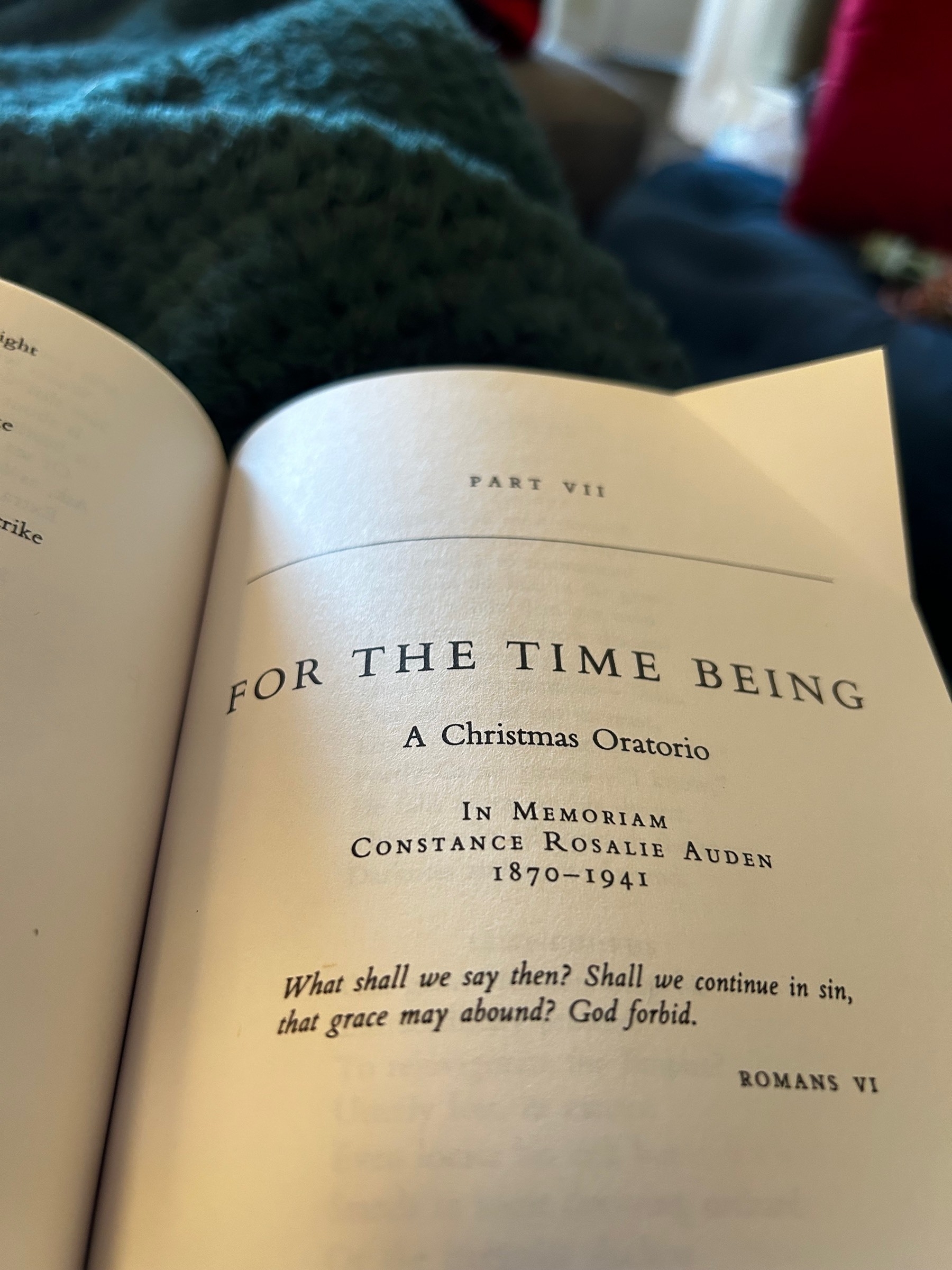
I’m now midway through the third year of formation. I submitted my final assignment for the last course and still have a fair amount of runway for the next course’s assignments. Reader, I am enjoying a nice break. Yesterday was my birthday, and I spent it the best way possible: mostly laying on the couch and reading. I started the day assisting at the 7AM daily mass, and ended it having dinner with my wife in an excellent little restaurant.

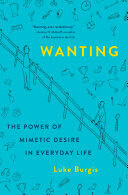
Reviewing the last few years of studies - I seem to come across one Big Idea every year. Some writer or concept that is mostly (if not entirely) brand-new and also sort of splits time into ‘before I knew this’ and ‘after I knew this.’ In the first year, it was René Girard’s theory of desire. In the second year, I went deep into Cassian’s Conferences and Institutes, and came away with a much deeper appreciation of the psychological insights of the desert movement. This past year, it was Charles Taylor’s work. One of my classes used James K.A. Smith’s How (Not) to be Secular, a whirlwind tour of Taylor’s A Secular Age. I received a copy of Taylor’s full book as a gift and can’t wait to get into it. There are apparently other books delayed but en route so I think my (leisure) reading time is pretty covered for a while to come.

The remainder of this academic year will cover the Church in America, a second round of catechetics, and the Eucharist. That last one will be taught by our vocations director (who has an STL and is now working on his JCL tl;dr, he’s wicked smart). He led our sacraments class, and to say it was rigorous is putting it mildly. I expect the same in this next class.
Advent is here, which means that it is about time for the annual reposting of William Tighe’s article Calculating Christmas:

It is true that the first evidence of Christians celebrating December 25th as the date of the Lord’s nativity comes from Rome some years after Aurelian, in A.D. 336, but there is evidence from both the Greek East and the Latin West that Christians attempted to figure out the date of Christ’s birth long before they began to celebrate it liturgically, even in the second and third centuries. The evidence indicates, in fact, that the attribution of the date of December 25th was a by-product of attempts to determine when to celebrate his death and resurrection.

How did this happen? There is a seeming contradiction between the date of the Lord’s death as given in the synoptic Gospels and in John’s Gospel. The synoptics would appear to place it on Passover Day (after the Lord had celebrated the Passover Meal on the preceding evening), and John on the Eve of Passover, just when the Passover lambs were being slaughtered in the Jerusalem Temple for the feast that was to ensue after sunset on that day.

Solving this problem involves answering the question of whether the Lord’s Last Supper was a Passover Meal, or a meal celebrated a day earlier, which we cannot enter into here. Suffice it to say that the early Church followed John rather than the synoptics, and thus believed that Christ’s death would have taken place on 14 Nisan, according to the Jewish lunar calendar. (Modern scholars agree, by the way, that the death of Christ could have taken place only in A.D. 30 or 33, as those two are the only years of that time when the eve of Passover could have fallen on a Friday, the possibilities being either 7 April 30 or 3 April 33.)

The end of the article references The Origins of the Liturgical Year by Thomas J. Talley. I can also attest that it is excellent if you’re interested in this sort of thing.

TL;DR Christmas was not borrowed from pagan Rome; evidence strongly suggests it was the other way around.