Yesterday, as part of preparation for ordination, I made a general confession. I had been thinking about it for awhile and my spiritual director encouraged me to continue meditating and praying about it. De Sales’s Introduction was a helpful (and fruitful) aid for this, and a week or so ago I sat down with pen in hand and started writing down everything. Old, new, I-think-I’ve-confessed-this-but-can’t recall, and so on. It started slow but picked up speed, and burning the paper afterward was thoroughly satisfying.

I don’t know if I will do it again but at a major hinge-point of life, it seemed fitting. As for the graces - seeing everything laid out on a list which covered a page was humbling, but also a reminder that God’s mercy is far beyond our understanding. Maybe we can’t understand it, except in tiny glimmers here and there.

My spiritual director (and confessor) related a story about St. Margaret Mary Alacoque. When she was revealing her visions, her own spiritual director sought to test her a little.

During your next vision, he said, ask the Lord to reveal my last mortal sin. At a subsequent visit, he asked if she had managed to do so.

Yes, she said.

And what did He say, asked the priest.

I don’t remember, said Margaret Mary.
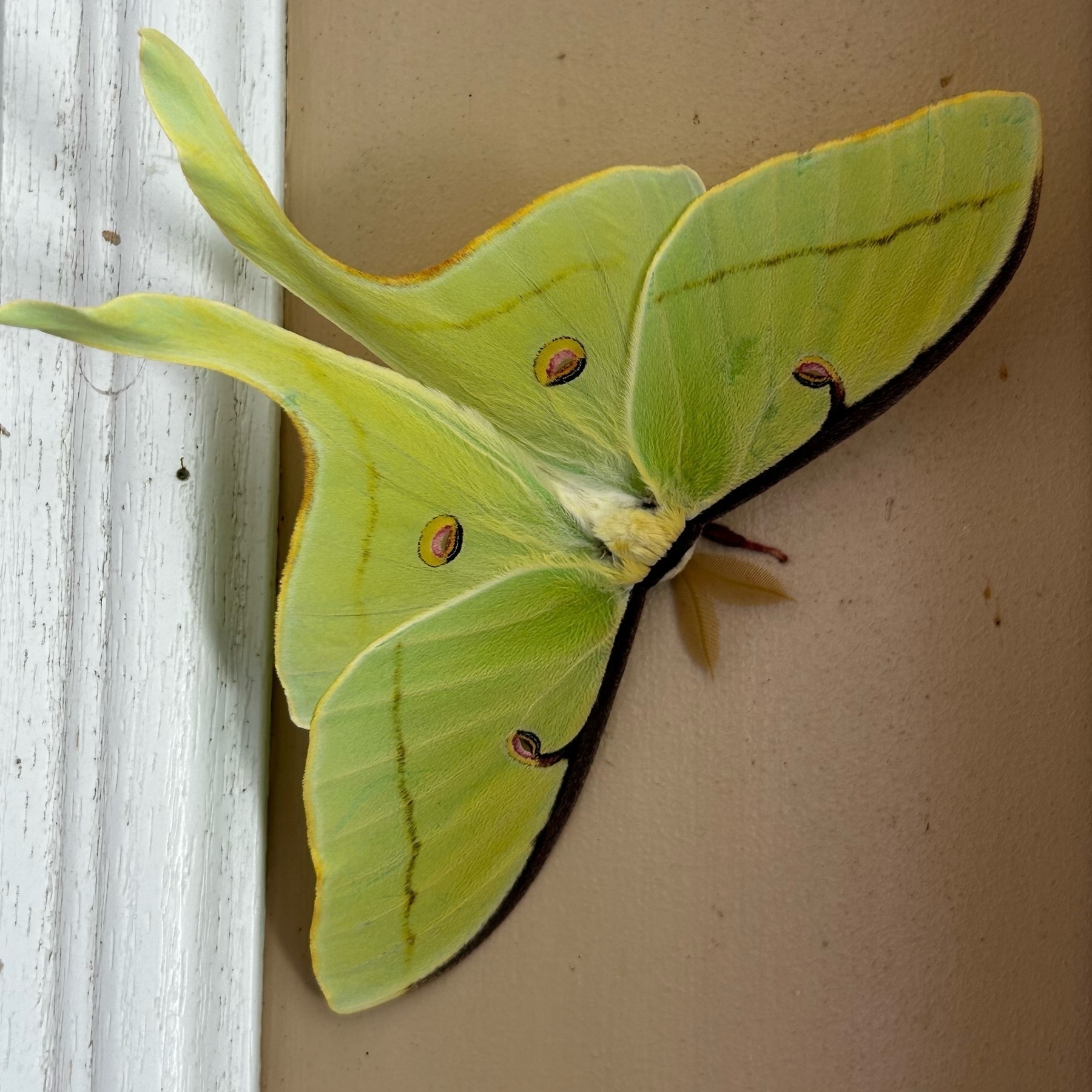
Lavender cuttings. Let’s see how this whole propagation thing goes.

Six small peat pots, each with a tiny cutting from a lavender plant in the middle.

So I managed to remove most of the hydrangea. It was…colossal, and I ended up transplanting an offshoot in a different spot where it’s free to get as crazy-big as it wants to. What’s left is bits of the stump which I’ve painted with a bit of herbicide to make sure I’m not fighting it for the next ten years. I’ve got some catmint rooting in water and will take some cuttings from the lavender and brown-eyed susans a bit later today.

In any case, all I can say is: be careful where you plant oak-leaf hydrangeas. Very careful. They can become uncontrollable monsters.

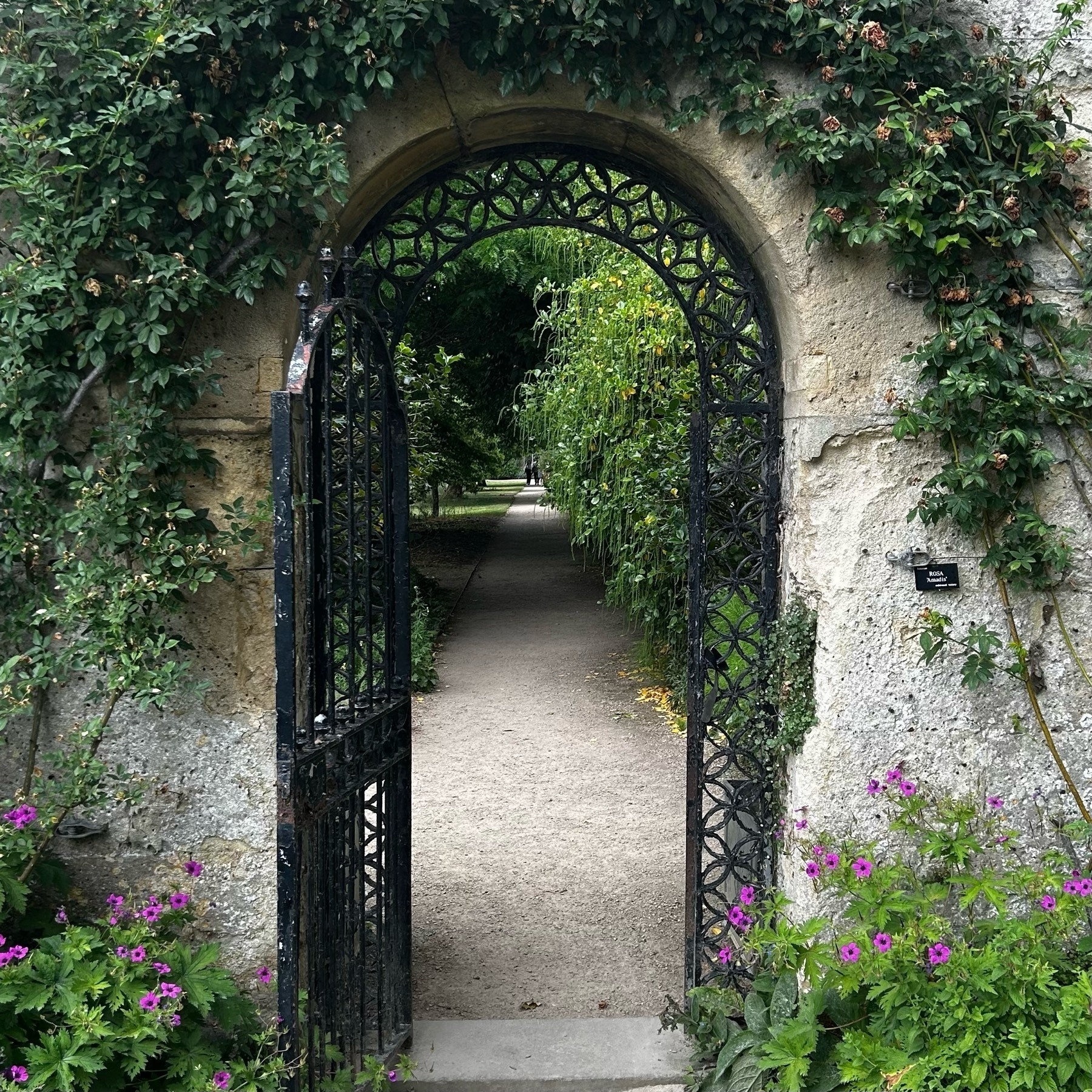
We visited a couple of botanic gardens on our trip and I’ve been fully won over to the cottage style, particularly in borders. Gardening has always been a mixed bag for us. We’ve generally done pretty well with container vegetables and have had raised beds in some form or fashion for a while. The trouble comes from keeping other stuff out of the raised beds. Our yard, such as it is, was formerly pasture. It’s green and nice from a distance, but up close it is a riotous jungle of stuff. This is good, and exactly what I want in greenery.

The problem is that a lot of the green stuff is bermuda grass, which makes a fabulous lawn but can only be really controlled by splitting an atom. It gets into everything. You go to pull out a small tuft in the raised bed and realize it’s connected to three feet of buried root, any particle of which can start growing an entire lawn by itself if left behind.

So I’ve surrendered the raised beds for now. My last gardening stand is the area along the front of the house. There’s a sidewalk between the yard and this area and I’ve been shifting to drought-hardy perennials and natives - stonecrop, coneflower, brown-eyed susans, and yarrow. I’ve transplanted some (butterfly weed and prickly pear) from other parts of the yard and am going to try my hand at propagating others (lavender, cat mint, and anise hyssop). One thing I’ll need to do is clear out a couple of overgrown oakleaf hydrangeas, and I’ll probably move a few of the perennial herbs from their containers into a spot or two. A sickly climbing rose has gotten the boot; I’m replacing it with a coral honeysuckle (‘Major Wheeler’) which should do well in the full sun/southern exposure and give the hummingbirds something to do.

I’m also attempting to rescue a few of the remaining strawberry plants from the raised bed catastrophe; if they make it, I’ll move them in as well to use as groundcover. Most of this area gets a brutal amount of sun, but there are a couple of small niches that stay in all-day shade. For those, I’ve moved a couple of maidenhair spleenwort ferns from our woody areas and will also take a look at pachysandra. I figure if the hostas can persist there, it’s shady enough. I am also, once again, trying to encourage the Virginia creeper to head up one of the brick walls.

The cottage style has been generally described as:

  • controlled chaos
  • tall in the back, short in the front
  • favor natives as much as possible
  • plant thick, allow spread, and let the plants fight it out
  • keep opportunistic plants/weeds if they look nice and behave
  • edibles throughout - herbs, berries, vegetables

I can get behind all of this, especially the controlled chaos bit.

On one of our walking tours in the UK, we stopped at a 16th century mausoleum that had some interesting carvings and whatnot on the outside, including lots of skulls and crossbones. Our tour guide pointed them out to us and then explained that the skull and crossbones motif came about because of a decree by a pope. As you can imagine, he had my attention.

There was, he explained, a fear by crusaders that if they died far from home, God might somehow miss them in the resurrection. There was another fear that if you, say, lost an arm in battle, you’d be minus an arm in the afterlife as well. This, said the tour guide, was not good for the crusading efforts, so a pope wrote a letter that decreed that only the skull and two femurs were necessary to be resurrected completely; as a bonus, they were also easy to ship home to the family plot. Problem solved - Catholics, amirite?

We covered a lot of interesting ground over the last few years, and some of it tended towards the weird and interesting, but this was a new one for me. With some AI assistance and a whole lot of Googling, I have determined that this story is BS.

As best as I can tell, the decree he might have been referring to was Detestande feritatis, issued by Boniface VIII in 1299 and which specifically forbade a practice referred to as mons Teutonicus. This was the practice of boiling down the recently deceased to remove all flesh and leave only a skeleton behind, which could then be transported to the decedent’s preferred burial site. I haven’t been able to find the text of this online anywhere, but if you’d like to read more, have a look at “Death and the Human Body in the Later Middle Ages: The Legislation of Boniface VIII on the Division of the Corpse” by Elizabeth Brown (DOI:10.1484/J.VIATOR.2.301488) for historical context and some excellent analysis.

The skull and crossbones have apparently been used as memento mori for some time, irrespective of scholastic debates on the resurrection. There are several discussions about bodily integrity and the resurrection in the Summa, but nothing that I could find on Lord’s minimum requirements for work.

Anyway it was fun to root around a little bit.

As you probably guessed from all the pictures, we recently visited the UK. We wanted to take in the sights, of course, but also sought out places associated with favorite writers. What we didn’t necessarily plan were all the encounters with various holy places and things along the way:

  • St. John Southworth, laying in a reliquary in the middle of Westminster Cathedral
  • St. Thomas More, whose execution site is marked on Tower Hill just across the road a bit from the Tower of London
  • Venerable Margaret Sinclair, whose shrine is in St. Patrick’s, Edinburgh
  • St. Margaret of Scotland, whose Gospel-book is in the Bodleian Library and has a chapel dedicated to her in Edinburgh Castle
  • The Holy Thorn Reliquary in the British Museum
  • St. Columba, who cast a monster from the River Ness upstream to the Loch (!) and was subsequently given the land where the Old High Church of Inverness sits now

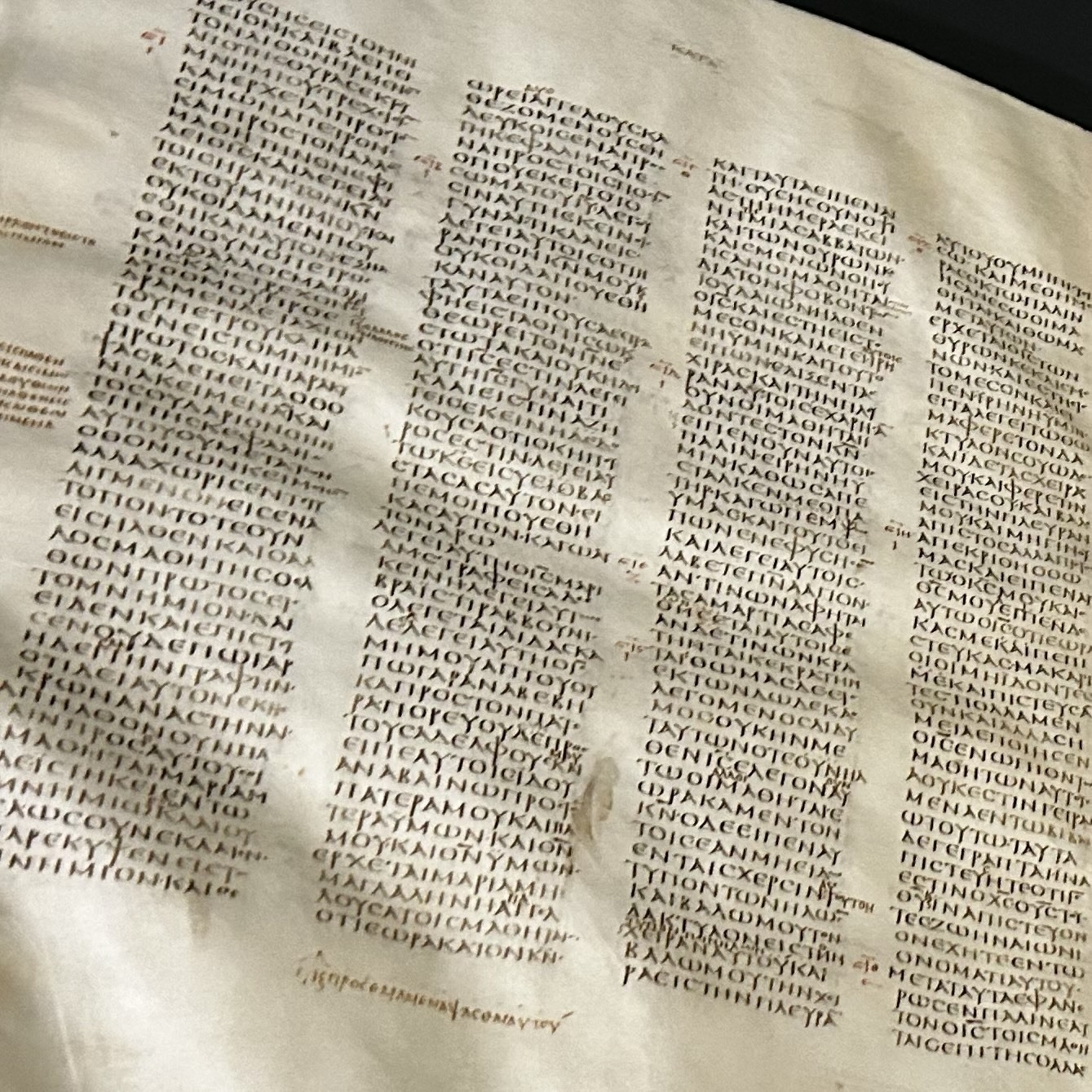
The Lindisfarne Gospels and Codex Sinaiticus were also highlights, along with all the other beautiful illuminated manuscripts.

As for writers, we visited Charles Dickens' house, scratched our Mary Poppins itch with Kensington and St. Paul’s Cathedral, went to Mass at the Oxford Oratory (“Where Gerard Manley Hopkins was a priest, Cardinal Newman preached, and JRR Tolkien attended Mass”), wandered Beatrix Potter’s Hill Top and Wordsworth’s stomping grounds in Hawkshead. Visiting Poet’s Corner at Westminster Abbey feels like cheating, but there was Spenser and the rest. Among them was Dr. Johnson; we passed by Boswell’s Court in Edinburgh, which was neat. Greyfriar’s Kirkyard in Edinburgh is said to have inspired a few names from the Harry Potter series, and we spent a morning picking through the riches of ages along Portobello Road.

We were blessed with excellent weather - warm (verging on hot) in London, mostly sunny and cool in the Lake District, and more of the same throughout Scotland. We traveled exclusively by train, foot, and one tour bus. It was lovely to travel and great to get back. By and large we ate pretty well, too. Visited quite a few pubs and drank excellent beer, too.