Warm sidewalk lazy dog cross post test
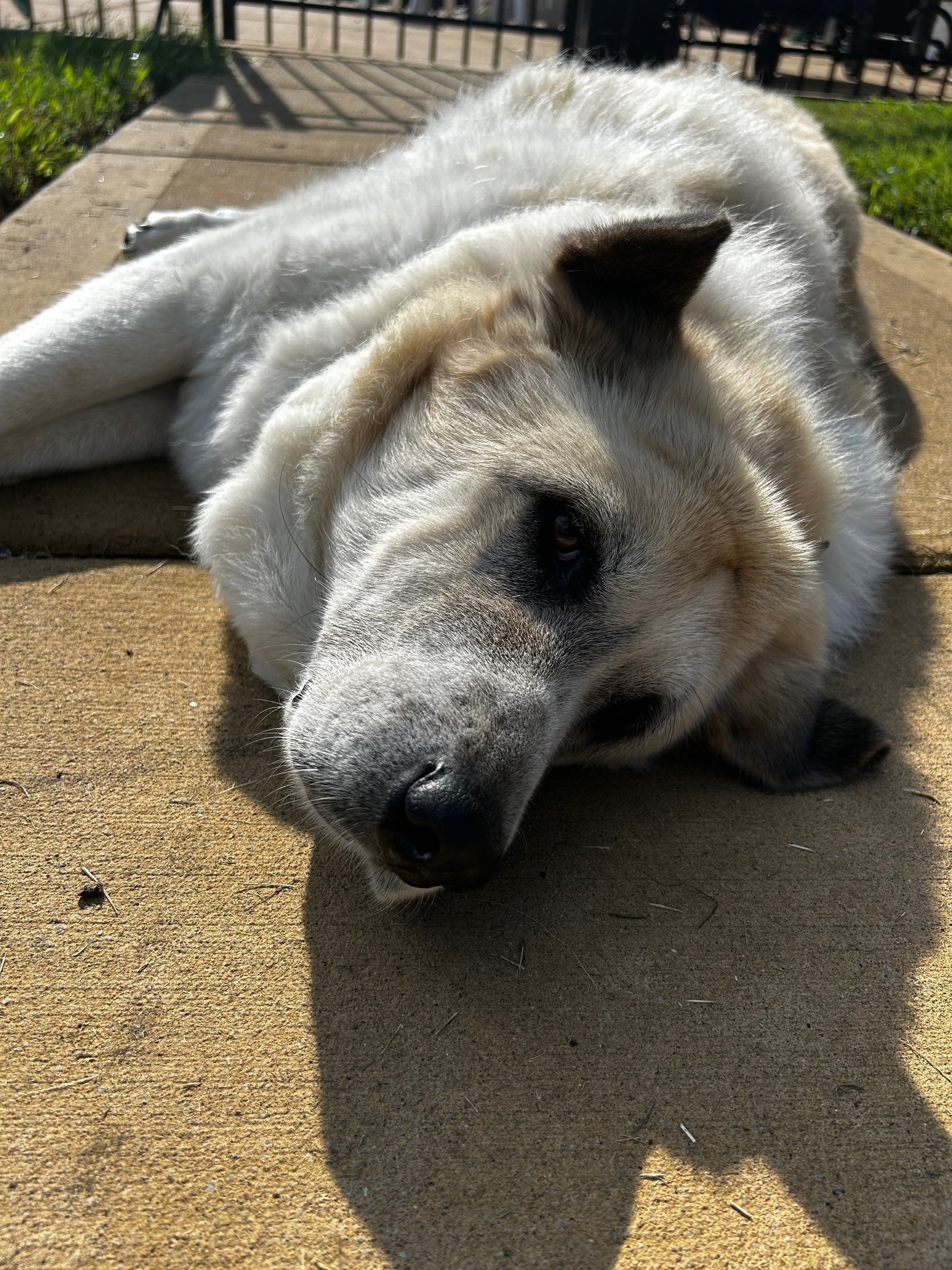
Warm sidewalk lazy dog cross post test
Reading Girard and then hitting the whole plankton zoo of socials.

Finished Selected Short Stories last night. On deck: Snopes by William Faulkner 📚
I've been thinking a lot about fictional geographies lately. I don't mean fantasy or sci-fi worlds - Middle Earth or Tattooine. I mean fictional places which are meant to exist in the real world.
A few years ago, I re-read Conrad's Nostromo and found myself looking more and more at the weirdness of its setting, the fictional South American country of Costaguana. Plot aside - and I confess that Nostromo is not my favorite Conrad novel - something about the setting always seemed sort of off to me. Distances to places are not terribly consistent, making for occasionally odd timelines. His occasional use of Spanish is also not-quite-right. The whole package feels very much like what it is - a novel written by someone who had heard and read a bit about the area and then decided to write a novel set there. This was annoying at first, but then I came to consider that - at least in terms of Costaguana's geography - the topographical fluidity was more of a feature than a bug. The country sort of wavers between minimalist set-dressing, like the production of King Lear, in which the action takes place solely in and around a mockup of Stonehenge, and a sort of mythical landscape along the lines of Toto's "Africa" I thought about this for a long time, and dreamed of producing mock-vintage travel posters in the style of the Pan Am glory days advertising Clipper service to Sulaco.
Costaguana hovers in the back of my mind as I'm starting to dig deeper into Faulkner's works, most of which are set in the fictional Yoknapatawpha County, MS. Comparing the two geographies is probably grossly unfair; Conrad set a single novel in South America and it's not clear if ever personally set foot in Colombia or Venezuela, the likeliest inspirations. Faulkner based Yoknapatawpha on his native Lafayette County, substituting Jefferson for real-life Oxford and setting nearly all of his intergenerational novels and short stories there. He lived there, and other than the place names and general topography, the descriptions of the landscape, trees, and birds all have the ring of truth that only an eyewitness can give. The county itself feels like an additional, silent, omnipresent character. I also find myself developing deep attachment to particular places and maybe that's one reason why Faulkner's attention to location/place has gained such mental purchase with me. The general region of northern Mississippi isn't far removed from our home in Middle Tennessee. There might be less limestone in Oxford, but the pine hills, cultivated fields, and river bottoms are about as universally Southern as things get. When he writes about "a grove of locusts and mulberries across the road," he might as well be describing the front quarter of our yard.
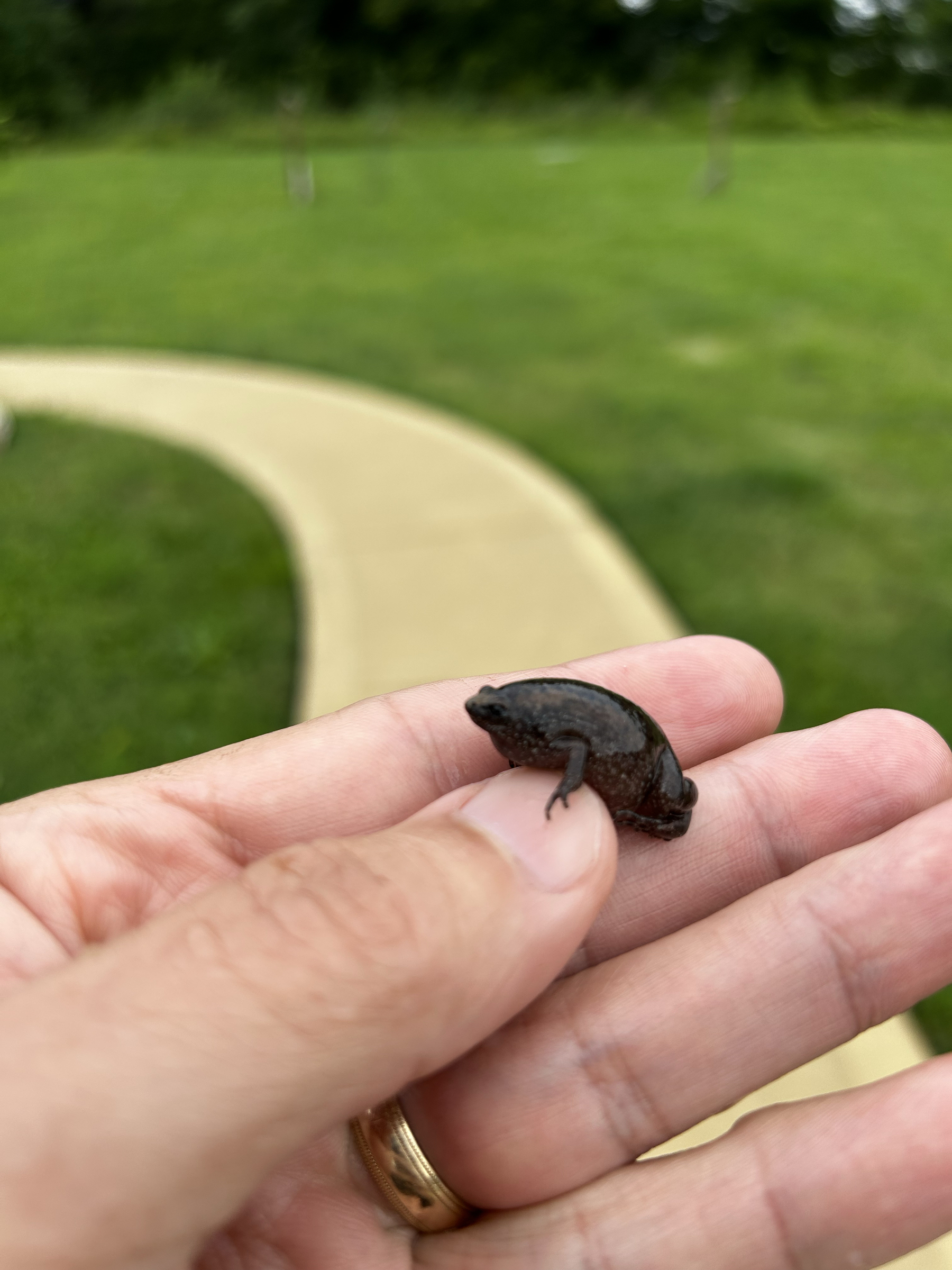
A wee Eastern Narrow-mouthed Toad, which is actually a terrestrial frog and not a toad.
Rainy day rabbit vibe

Science we can all get behind.
One of his studies had led him to an unusual conclusion: Among diabetics, eating half a cup of ice cream a day was associated with a lower risk of heart problems. Needless to say, the idea that a dessert loaded with saturated fat and sugar might actually be good for you raised some eyebrows at the nation’s most influential department of nutrition.
For 20 years now, I have been heading from my native Vermont to the American West—Utah, Arizona, Nevada, Southern California—to hike and camp in the desert. Or, as the New Testament would have it, the eremos. That is the ancient Greek word for wilderness, a lonely place of naked rock, blazing sun and humming silence. And maybe, if you pray and pray, if you genuinely open yourself, it is a place of divine presence, too.
Camping with the Desert Fathers, Leath Tonino
Overheard in the frozen food section of the supermarket today:
Little boy: Oh! Do we need ice cream?
Dad: Nooo we do not need ice cream. pushes cart faster
I nearly interrupted with “Young sir, at our house, in accord with divine law, there is always a need for ice cream. Please select one, stash it in our cart, and drop by later today to help eat it.”
Grand Isle, LA