Calculating Christmas

Many Christians think that Christians celebrate Christ’s birth on December 25th because the church fathers appropriated the date of a pagan festival. Almost no one minds, except for a few groups on the fringes of American Evangelicalism, who seem to think that this makes Christmas itself a pagan festival. But it is perhaps interesting to know that the choice of December 25th is the result of attempts among the earliest Christians to figure out the date of Jesus’ birth based on calendrical calculations that had nothing to do with pagan festivals.

Calculating Christmas, by William Tighe

A politics of conversion

Like alcoholism and drug addiction, nihilism is a disease of the soul. It can never be completely cured, and there is always the possibility of relapse. But there is always a chance of conversion a chance for people to believe that there is a hope for the future and a meaning to struggle. This chance rests neither on an agreement about what justice consists of nor on an analysis of how racism, sexism, or class subordination operate. Such arguments are indispensable. But a politics of conversion requires more. Nihilism is not overcome by arguments or analyses; it is tamed by love and care. Any disease of the soul must be conquered by a turning of one's soul. This turning is done through one's affirmation of one's worth an affirmation fueled by the concern of others. A love ethic must be at the center of a politics of conversion.

Cornel West, "Nihilism in Black America," Race Matters 📚

Books and thoughts on Lectio

Incoming books:

  • Race Matters by Cornel West
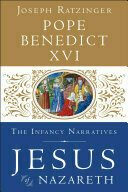
  • Jesus of Nazareth: The Infancy Narratives by Pope Benedict XVI
  • Learning the Virtues by Romano Guardini

I finished the Rilke collection the other night. On the whole, I liked it - particularly The Duino Elegies. Much of it was gorgeous opaque, but then:

And now in vast, cold, empty space, alone.
Yet hidden deep within the the grown-up heart,
longing for the first world, the ancient one...

Then, from His place of ambush, God leapt out.

That's from "Imaginary Career." Even in translation, Rilke turns a phrase. I also finished The Sign of Jonas, and I'm going to have to think about that one for awhile. Coming as it does at this time of my life - in these particular circumstances - it sheds a great deal of light on the contradictions of a vocation. What God wills against what you expect (or even desire). And this according to the You that stands apart! What he sought in Gethsemani was not what he found. Not at first, anyway. In the end he found it, but he had come so far in his understanding that he barely recognized the person who had begun the same book he was finishing. This book was recommended to me, I think because I had expressed an affinity for both Jonah and Thomas Merton. Certainly I'll be turning over contradiction for some time to come.

Lectio has been alternating between Isaiah and the Gospel reading for this Sunday, which marks the beginning of Advent. As I'm writing this, that would be Mark 13:33-37. The things that 'jump out' and stay with me from session to session continue to astonish me.

At first it was watch and pray. Surely we only watch when we are confident that the master will return? We wait in perfect expectation. And we pray in all things, at all times. Let prayer be unceasing, but not unconscious. A man once told me that he wasn't sure when he wasn't praying! That's what I want, how I want to be. David Steindl-Rast shows us that gratitude as a response to a gift is an act of profound love and prayer. It recognizes the gift, as gift, which means it also acknowledges the giver.

The next night it was what I say to you, I say to all.  All are to watch. No one is exempt! The invitation is universal. Could this also be read a bit differently? Those who hear have a solemn charge to show and tell. As He speaks to us, so He speaks to all - if we let Him. "The medium is the message." Did you know that McLuhan was Catholic? I only learned that a few years ago, to be honest.

Last night I stayed with whether in the evening, or at midnight, or at cockcrow, or in the morning. I'm still pondering this one. These are nighttime and the liminal moments surrounding darkness, maybe when watchfulness is most difficult.

I'm not even sure if trying to capture these thoughts and responses is worthwhile - something seems to be lost between the heart, the head, and the keyboard.
This is powerful, powerful stuff.

The Last Children of Down Syndrome by Sarah Zhang. I'm a subscriber and try to hold off on reading the cover stories until I have the magazine in hand, but I broke that rule this time.

The introduction of a choice reshapes the terrain on which we all stand. To opt out of testing is to become someone who chose to opt out. To test and end a pregnancy because of Down syndrome is to become someone who chose not to have a child with a disability. To test and continue the pregnancy after a Down syndrome diagnosis is to become someone who chose to have a child with a disability. Each choice puts you behind one demarcating line or another. There is no neutral ground, except perhaps in hoping that the test comes back negative and you never have to choose what’s next.

What kind of choice is this, if what you hope is to not have to choose at all

Later:

In late 2018, Genomic Prediction, a company in New Jersey, began offering to screen embryos for risk of hundreds of conditions, including schizophrenia and intellectual disability, though it has since quietly backtracked on the latter. The one test customers keep asking for, the company’s chief scientific officer told me, is for autism. The science isn’t there yet, but the demand is.

Building Bridges, Made for Love

Just finished (in near-record time) both Building A Bridge by Father James Martin, SJ and Made for Love by Father Mike Schmitz. Both explore the same subject: LGBTQ+ people and their place in the Church. I thought the books complemented each other very well - Building A Bridge sets the stage very nicely, opening the way to a dialogue based on respect, compassion, and sensitivity. It is thoroughly pastoral in its focus. Made for Love covers some of the same ground, but takes a closer look at some of the theology. In any event, both converge in and around the same place: the universal call to God's love is just that: universal. None are exempt or cast out. The living Christ meets each of us where we are, as we are. Yes, the call to love is accompanied by a call to conversion and none are exempt from that either. The encounter of Jesus with Zaccheus the tax collector shows us a pattern: welcome and community first, conversion next. 

I see from reviews that most folks fall in an either-or stance with respect to the two authors. Sorry, but I'm not seeing it. Neither sets out to be the definitive pastoral or theological manual. Each comes off as sensitive to the struggles of the individuals and their lived experiences. Both point to our final end: life abundant in the glory of God.

I recommend both.


The mint has grown back so I guess it’s mojitos in November. The cold will be here for good at some point but until then…

RIP Rabbi Sacks

Very sad to read that Rabbi Lord Jonathan Sacks passed away over the weekend. His Erasmus speech several years ago set me on a reading project which continues to this day. I very much liked his Essays on Ethics, and anticipate returning to it often in the future.

Requiem æternam dona ei, et lux perpetua luceat ei.

It’s 75 here today so we’re barbecuing and hanging around outside. Winter will get here when it gets here but for now…